简体中文
简体中文

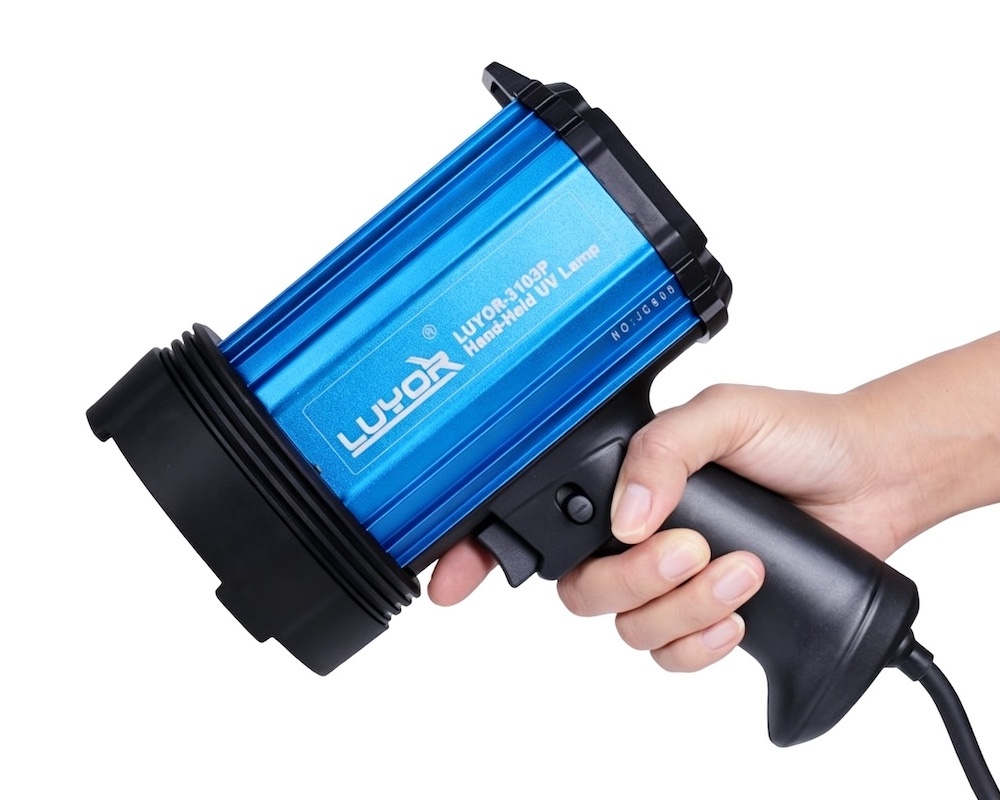
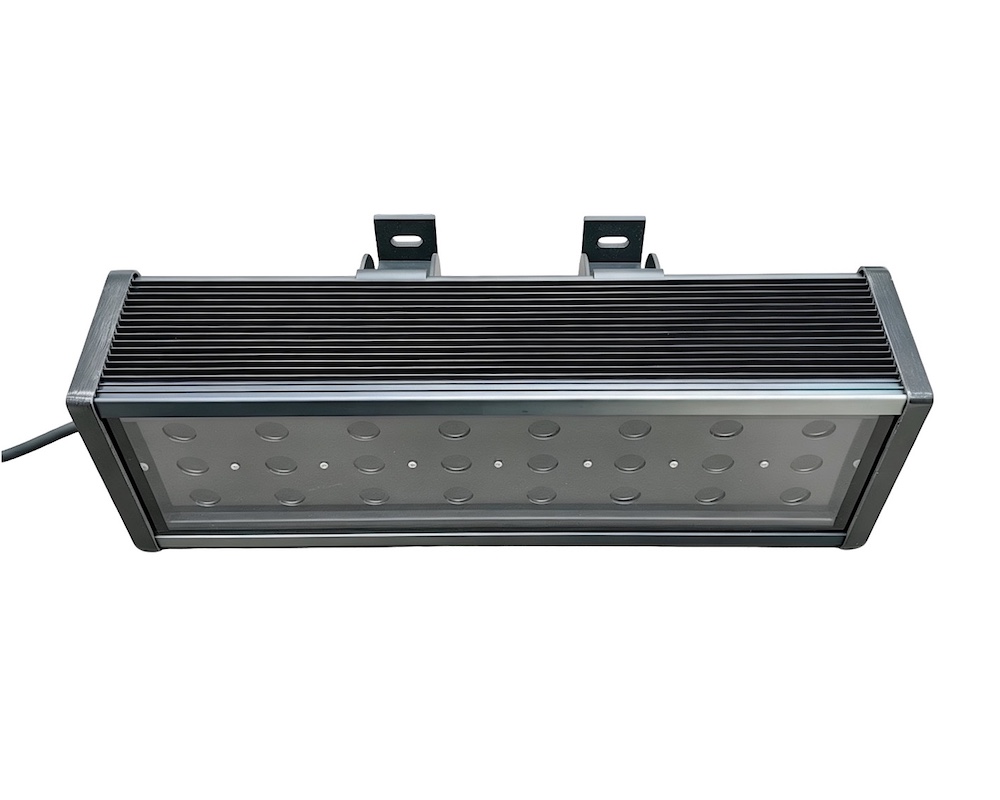
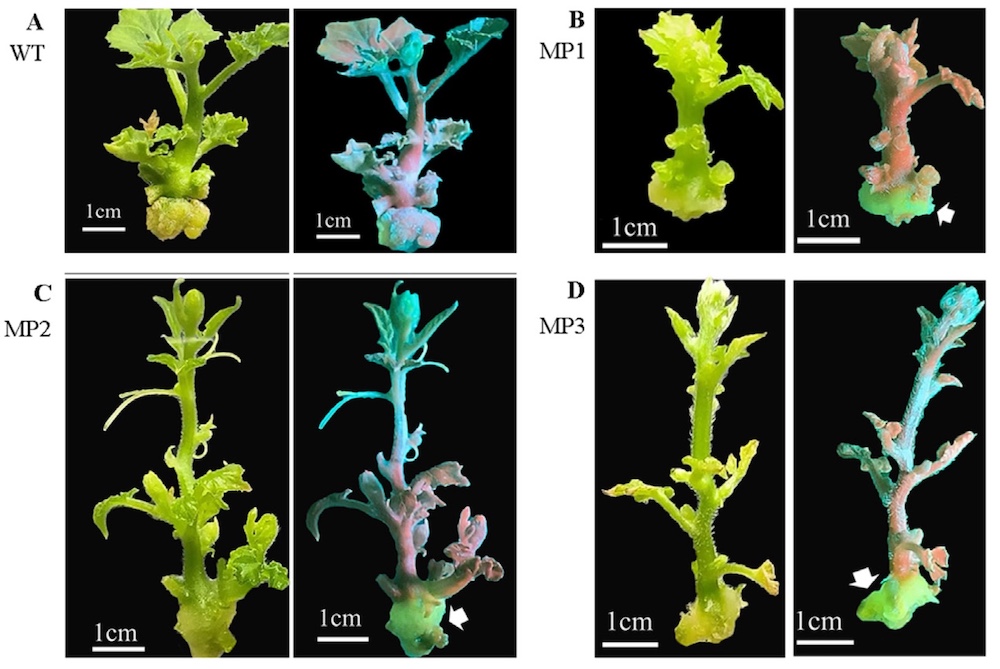
In a study published in Horticultural Plant Journal (Zhao et al., 2025), researchers from the Chinese Academy of Agricultural Sciences developed a streamlined Agrobacterium rhizogenes-mediated hairy root transformation system for efficient CRISPR/Cas9-based gene editing evaluation in diverse Citrullus cultivars. The fluorescent protein excitation lamp LUYOR-3415RG was used to select positive transgenic watermelon buds in A. tumefaciens-mediated stable transformation, enabling the researchers to rapidly distinguish GFP-positive transgenic buds from wild-type controls under blue light.
Abstract
The CRISPR/Cas9 genome-editing system serves as a pivotal tool for enhancing crop genetics. Within this system, single guide RNAs (sgRNAs) are instrumental in the precise cleavage of DNA double strands. However, the efficiency of gene editing varies among sgRNAs, emphasizing the need to meticulously select target sites, especially in the context of Citrullus lanatus, a species notorious for its challenging and inefficient generation of transgenic plants through stable transformation. This study employed an Agrobacterium rhizogenes-mediated hairy root method to assess effective target sites for gene editing of ClCIPK17 across various Citrullus species. Hairy roots were successfully induced in different plant tissues at diverse growth stages of Citrullus lanatus, Citrullus mucosospermus, and Citrullus amarus. Employing a vector with two sgRNAs (sgRNA1 and sgRNA5) positioned within conserved regions of exon 1 and exon 5 of ClCIPK17 in the CRISPR/Cas9 system, targeted mutations were detected in 90.9% of accessions across the four Citrullus species. Notably, 73.94% of all examined hairy roots exhibited mutations at the sgRNA1 site, while the sgRNA5 site showed no mutations. Among the 31 different mutation types identified at the sgRNA1 site, base deletion was the most prevalent. Using the sgRNA1 site of ClCIPK17, stable transgenic watermelon buds were obtained from explants, and the targeted mutations of the sgRNA1 site were confirmed. These findings underscore the viability of the hairy root transformation system in assessing the editing efficiency of sgRNA targets in diverse Citrullus species.
Identifying GFP-Positive Transgenic Buds With Fluorescent Protein Excitation Lamp LUYOR-3415RG
The genetic transformation of watermelon explants was performed according to the previously reported methods (Liu et al., 2016; Tian et al., 2017; Pan et al., 2022). In brief, the watermelon CA accession ‘YL’ seeds were soaked in warm water at 55 °C for 30 min, and surface-sterilized seeds were sown on 1/2MS solid medium for 2 days in the dark. The cotyledons without the embryo were cut into 1.5 mm × 1.5 mm pieces as explants. A. tumefaciens GV3101 strain harboring the binary vector pBSE402-ClCIPK17 and the explants were suspended in MS liquid medium for 20 min. After drying on filter paper, the infected cotyledon explants were cultivated in the dark at 28 °C for 3 days on MS solid medium containing 1.5 mg · L-1 6-benzylaminopurine (6-BA). The explants were transferred to MS medium containing 200 mg · L-1 Timentin, and 1.5 mg · L-1 6-BA. Regenerated adventitious buds were transferred to MS medium containing 0.1 mg · L-1 6-BA, 0.01 mg · L-1 1-naphthaleneacetic acid (NAA), and 200 mg · L-1 Timentin. After the buds formed intact leaves and stems, they were transferred to a rooting medium containing 0.5 mg · L-1 indole-3-butyric acid (IBA), and 200 mg · L-1 Timentin. Positive transgenic plants were selected using the dual fluorescent protein excitation lamp LUYOR-3415RG.
Photo below: Images of positive transgenic buds taken under bright light (left) or fluorescent protein excitation lamp LUYOR-3415RG (right)
Reference
Zhao, Y., Zhu, H., Lu, X., Anees, M., He, N., Yang, D., Chen, Z., Hong, Z., Zhang, J., & Liu, W. Streamlined Agrobacterium rhizogenes-mediated hairy root transformation for efficient CRISPR/Cas9-based gene editing evaluation in diverse Citrullus cultivars. Hortic. Plant J. 11, 816–826 (2025).